
AI-generated imagery is now part of the visual culture of architecture. It can create convincing buildings, interiors and urban environments in seconds. For early concepts, mood studies, speculative projects and visual exploration, it clearly has a role.
But AI imagery and architectural photography are not interchangeable.
When an architect presents completed work, the image carries a particular responsibility. A practice website, awards submission, press feature, bid or project record depends upon clarity and credibility. The photographs need to show what was designed, constructed and delivered—not an idealised version of what the project might have been.
Architectural photography remains important because it is tied to the real building: its materials, proportions, context, workmanship, constraints, light and atmosphere.
Realism and evidence
AI-generated architecture can look remarkably polished. It readily produces clean lines, immaculate surfaces, dramatic skies and ideal light. At first glance, the result may appear entirely believable.
Yet visual realism is not the same as documentary credibility.
Real buildings occupy imperfect and specific conditions. They have neighbouring structures, existing fabric, changing weather, landscape, reflections, signs of occupation and the limitations of their sites. These elements are not necessarily distractions from the architecture. Often, they explain the circumstances to which the design responds.
Good architectural photography does not need to make a building appear perfect. Its purpose is to make the completed project legible: to show how spaces connect, how materials meet, how light enters and how the building relates to its surroundings.
The photograph becomes persuasive because its interpretation remains accountable to something that exists.
Speed and observation
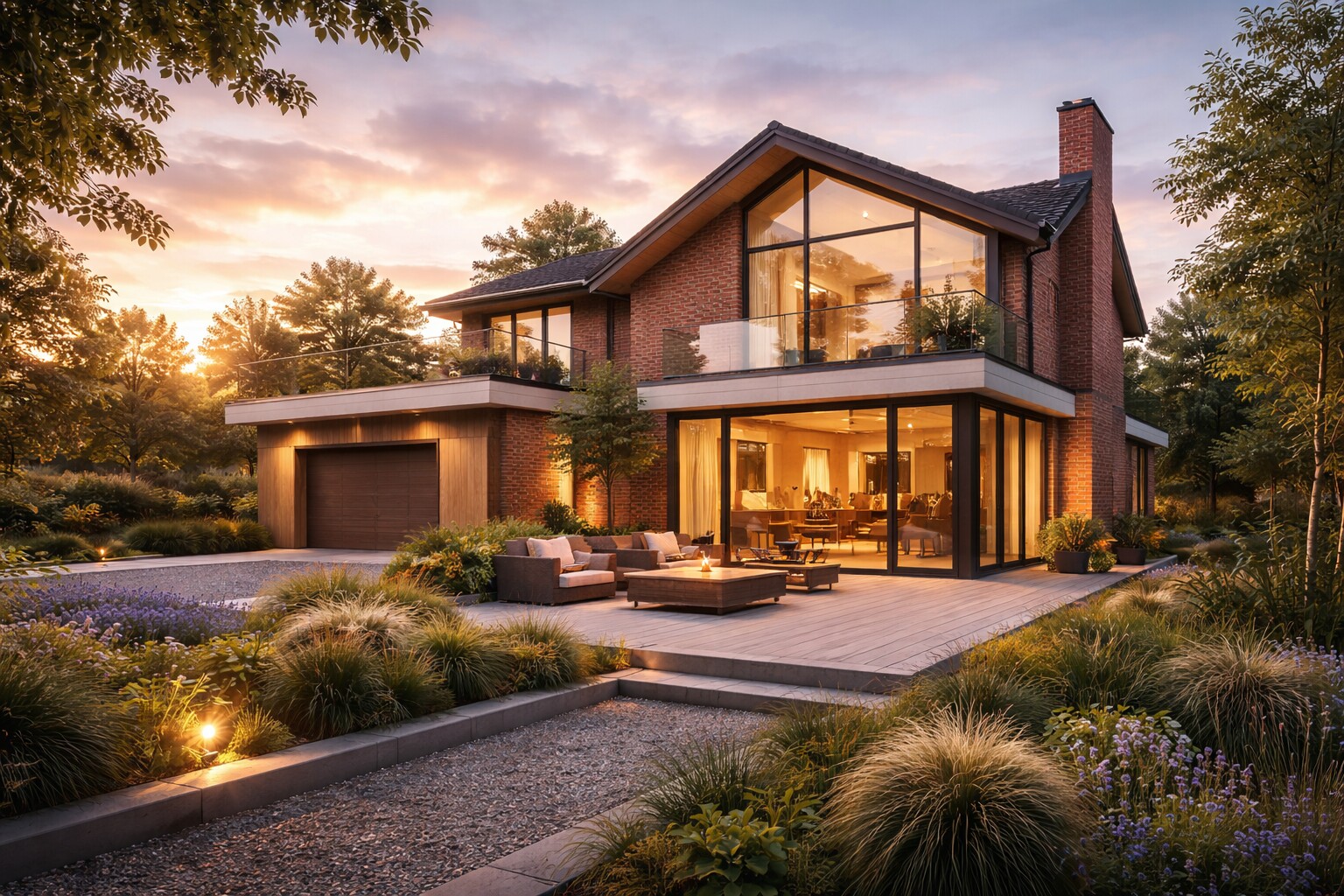
AI imagery is fast. A prompt can generate a clean architectural scene almost instantly. Surfaces can be perfected, clutter removed, skies replaced and difficult context avoided.
Architectural photography works differently because it requires an encounter with a real place. It involves planning, access, orientation, daylight, weather, site readiness and the particular qualities of the finished project.
That slower process is not simply a technical limitation. It is part of the value of photography.
Time spent at the building allows the photographer to discover relationships that may not have been obvious in advance: the way a long view connects two spaces, how an opening frames the landscape, where an existing wall meets a new intervention, or how the character of a material changes as the light moves.
These observations cannot be separated from being physically present. They arise through looking, moving, waiting and responding to what is actually there.
Documentation, not fabrication
The essential distinction is straightforward: architectural photography documents; AI imagery generates.
That does not make one universally better than the other. They serve different purposes.
AI imagery can be useful before something exists. It can explore massing, atmosphere, material possibilities or a visual direction. It may help architects and clients discuss a proposal that has not yet been resolved or constructed.
Once the building is complete, however, the purpose of the image changes. The question is no longer “What could this be?” but “What has been built?”
Completed-project photography is frequently used as evidence: evidence of design quality, technical resolution, material choices, environmental decisions, client outcomes and the practice’s ability to deliver.
Photography carries that evidential value because it originates in the real project.
Context and architectural detail
AI imagery often removes the friction that makes a project particular. Architectural photography has to work with that specificity.
The photographer encounters junctions, edges, weathering, changes in material, neighbouring buildings, existing landscape and signs of occupation. These details are not incidental. They are often where the architectural thinking becomes most visible.
This is particularly important in retrofit, heritage work and contemporary extensions. The achievement may not lie in spectacle, but in restraint: the proportion of an opening, the continuation of a material, the treatment of historic fabric or the way a new volume sits quietly within an established setting.
These qualities need to be observed rather than invented.
A photograph that removes too much context may make the building appear cleaner, but it can also remove the conditions that explain the design. The aim is not to preserve every temporary distraction. It is to distinguish between visual noise and meaningful architectural evidence.
Interpretation and human judgement
Architectural photography is not neutral. The photographer decides where to stand, what to include, what to leave outside the frame, when to wait and how to balance context with clarity.
Post-production introduces further judgement. Colour, perspective and tonal relationships may be refined, while temporary site elements or minor distractions can sometimes be removed. The objective is not to pretend that no interpretation has taken place. It is to ensure that the interpretation remains faithful to the completed architecture.
That distinction matters.
The strongest architectural photography does not impose a visual style so forcefully that the building becomes secondary. It uses composition, light and sequencing to make the architect’s decisions understandable.
Human judgement is valuable here because it responds to the individual project. It recognises what is important, what is incidental and what must remain for the image to be credible.
Where AI belongs
AI imagery has a valid place within architectural culture. It can support early design thinking, speculative visualisation and exploratory communication. It may become increasingly useful as a way of testing ideas before construction.
The issue is not whether architects should use it. The issue is whether the nature of the resulting image is clear.
A speculative visualisation and a photograph of completed work make different claims. Confusing the two weakens the trust placed in architectural images more broadly.
Practices therefore need to distinguish clearly between what has been imagined and what has been delivered—particularly when imagery is used for websites, awards, press, bids and long-term project records.
Why the distinction matters
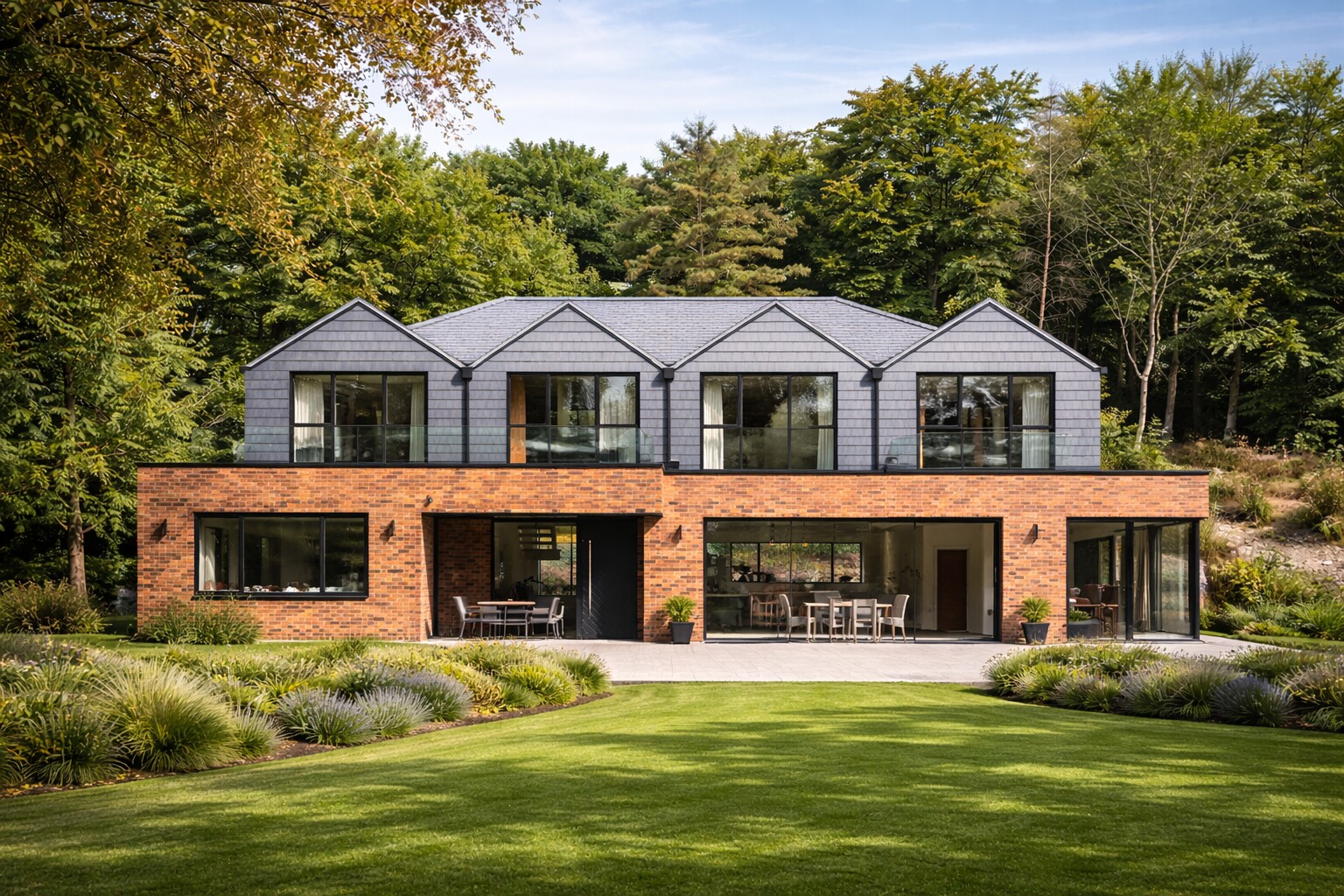
The growing presence of synthetic imagery may make real architectural photography more valuable, not less.
As convincing images become easier to generate, visual polish alone carries less authority. Architects will increasingly need to demonstrate not only what they can imagine, but what they have actually built.
Architectural photography provides that record. It shows completed work with material presence, context and professional clarity. It allows the project to be examined as a real construction rather than an unrestricted visual proposition.
AI can generate convincing architectural images.
Photography shows the building that exists.
For completed architectural work, that difference remains essential.